
Smart Computing Frontier (SCF 2026)


International Conference on Blockchain (ICBC 2026)
https://www.servicessociety.org/icbc , August 22 - 25, 2026, Kuala Lumpur, Malaysia
Theme: Agentic AI as a Service (AAIaaS) for Blockchain
Verifiable Trust and Coordination for Agentic Systems
Introduction
The International Conference on Blockchain (ICBC) is an international forum for advancing the foundations, architectures, protocols, security mechanisms, systems, governance models, and applications of blockchain and distributed-ledger technologies.
Blockchain systems enable multiple parties to maintain shared and verifiable records without relying on a single controlling authority. Through distributed consensus, cryptographic verification, programmable smart contracts, and decentralized identity, blockchain can support trusted coordination across organizational and administrative boundaries.
The emergence of Agentic AI introduces new requirements for digital identity, delegation, authorization, transaction, provenance, and accountability. Autonomous agents may invoke services, exchange data, negotiate agreements, initiate transactions, and act on behalf of people or organizations. These activities require mechanisms that make agent identities, permissions, commitments, and actions verifiable.
ICBC 2026 welcomes original research, system innovations, security analysis, protocols, tools, benchmarks, and evidence-based applications that advance blockchain technologies and their responsible use.
Blockchain is not the appropriate solution for every distributed application. Submissions should clearly justify the need for decentralized trust, identify the participating and potentially adversarial parties, and explain why a blockchain-based design is preferable to conventional databases or trusted centralized systems.
ICBC 2026 Theme
The theme of ICBC 2026 is:
Agentic AI as a Service for Blockchain
Agentic AI systems can pursue goals, use tools, access resources, coordinate with other agents, and perform transactions. As their autonomy increases, it becomes increasingly important to establish who or what an agent represents, which actions it is authorized to perform, and how its decisions and transactions can be verified.
For the ICBC community, the central question is:
How can blockchain provide verifiable identity, authorization, coordination, transaction, and accountability mechanisms for Agentic AI?
Blockchain can support agentic systems through:
Decentralized identifiers and verifiable credentials for agents
Policy-bound delegation and authorization
mmutable records of agent actions and decisions
Smart contracts for service agreements and transactions
Cross-organizational coordination without a single trusted operator
Cryptographic provenance for data, models, and generated content
Transparent governance and dispute-resolution mechanisms
This creates several important transitions:
From informal software identities to verifiable agent identities
From unrestricted tool access to auditable authorization
From opaque actions to traceable commitments and outcomes
From centralized settlement to programmable transactions
From platform-specific agents to cross-organizational trust
From human-only contracting to safeguarded agent-mediated agreements
At the same time, blockchain does not make an agent’s reasoning correct or its actions safe. Effective agentic systems require careful integration of cryptographic trust with policy enforcement, runtime controls, human oversight, privacy protection, and off-chain verification.
ICBC 2026 invites researchers and practitioners to examine both the opportunities and limitations of blockchain-supported Agentic AI.
Scope and Topics of Interest
ICBC focuses on blockchain and distributed-ledger foundations, consensus, smart contracts, cryptographic trust, decentralized identity, interoperability, governance, and blockchain-enabled applications.
Research whose primary contribution concerns general AI safety, data governance, cloud infrastructure, Web services, IoT systems, or service engineering should be submitted to the corresponding SCF conference unless it makes a specific contribution to blockchain or decentralized trust.
Topics include, but are not limited to:
1. Blockchain for Agentic AI
Decentralized identity and verifiable credentials for agents
Agent authorization, delegation, and capability control
Verifiable agent actions, provenance, and audit trails
Smart contracts for agent-mediated services and transactions
Decentralized coordination and governance of multi-agent systems
Blockchain-based incentives and reputation for autonomous agents
2. Distributed-Ledger Foundations
Consensus protocols and Byzantine fault tolerance
Permissionless, permissioned, and consortium blockchains
Distributed-ledger architectures and data structures
Peer-to-peer networking and transaction dissemination
Scalability, throughput, latency, and storage efficiency
Formal specification and verification of blockchain protocols
3. Smart Contracts and Decentralized Applications
Smart-contract languages, runtimes, and execution environments
Smart-contract analysis, testing, and formal verification
Contract composition, upgradeability, and lifecycle management
Oracles and trusted connections to off-chain data
Decentralized applications and autonomous organizations
Programmable assets, agreements, and business processes
4. Blockchain Security, Privacy, and Cryptography
Blockchain attacks, vulnerabilities, and defense mechanisms
Zero-knowledge proofs and privacy-preserving ledgers
Multiparty, threshold, and confidential computation
Wallet, key, and digital-asset security
Secure bridges, oracles, and smart contracts
Post-quantum security for blockchain systems
5. Interoperability, Identity, Economics, and Governance
Cross-chain and cross-ledger interoperability
Decentralized identity and credential ecosystems
Tokenization and digital-asset infrastructure
Protocol incentives, token economics, and mechanism design
Decentralized governance and dispute resolution
Standards, regulation, compliance, and accountable innovation
6. Applications and Experimental Practice
Financial infrastructure and programmable payments
Supply chains, provenance, and product traceability
Public records, digital identity, and government services
Data, content, copyright, and intellectual-property management
Energy, sustainability, and environmental markets
Enterprise deployments, benchmarks, and industry experience
Paper Tracks
The ICBC 2026 technical program includes four submission tracks.
Research Track
The Research Track welcomes original and technically rigorous contributions that advance blockchain protocols, architectures, security, cryptography, smart contracts, or decentralized systems.
Research papers should:
Clearly define the blockchain research problem
State the trust assumptions and adversary model
Justify the use of blockchain or decentralized trust
Explain the novelty relative to relevant literature
Provide rigorous security, performance, or formal analysis
Use appropriate baselines and centralized alternatives
Support reproducibility and discuss limitations
Application and Industry Track
The Application and Industry Track focuses on deployed blockchain systems, enterprise platforms, governance practices, and evidence-based operational experience.
Papers should:
Describe a significant multi-party trust or coordination problem
Explain why a blockchain-based architecture is appropriate
Present deployment evidence or measurable outcomes
Discuss governance, security, privacy, interoperability, cost, and regulation
Identify lessons that can be transferred to other environments
Clarify the practical or system-level innovation
Papers in this track do not need to introduce a new consensus or cryptographic algorithm. However, they should contribute through architecture, deployment evidence, governance design, security analysis, or generalizable practical knowledge.
Short Paper Track
The Short Paper Track welcomes focused contributions, including:
Promising early-stage research
Novel protocol or system concepts
Emerging challenges and research visions
Datasets, benchmarks, tools, and reusable artifacts
Focused security findings or negative results
Concise deployment and governance reports
Short papers must clearly state their contribution, evidence, relationship to prior work, and limitations.
Special Paper Track
The Special Paper Track addresses designated emerging topics and community priorities announced by ICBC 2026. Submissions should follow the requirements of the corresponding special-track call.
Review and Submission Requirements
All submissions must report original and unpublished work and must not be under review elsewhere at the time of submission.
Each manuscript will be reviewed by at least three program committee members. Papers will be evaluated according to:
Relevance to ICBC
Originality and significance
Technical or practical quality
Security and trust assumptions
Strength of evaluation
Clarity and reproducibility
Research or real-world impact
Papers should position their contributions accurately within the relevant international literature. Authors are encouraged to cite ICBC and other conferences or journals when genuinely relevant. Citation of any particular venue is not required.
Research Track and Application and Industry Track manuscripts are limited to 15 pages in the Springer LNCS format. Short Paper Track manuscripts are limited to 8 pages. Authors may purchase up to two additional pages, subject to the applicable publication fee. Special Paper Track submissions should follow the limits specified in the corresponding call.
Authors must use the official Springer LNCS templates:
Electronic submission in PDF or Word format is required. Manuscripts that do not follow the required format or exceed the permitted page limit may be returned without review.
A Research Track submission that primarily presents a deployed application or operational solution may be recommended for consideration by the Application and Industry Track.
At least one author of each accepted paper must register for ICBC 2026 and present the paper at the conference.
Paper Submission
Research Track
Submit to the ICBC 2026 Research Track: https://edas.info/newPaper.php?c=34932&track=136052
Application and Industry Track
Submit to the ICBC 2026 Application and Industry Track: https://edas.info/newPaper.php?c=34932&track=136051
Short Paper Track
Submit to the ICBC 2026 Short Paper Track: https://edas.info/newPaper.php?c=34932&track=136053
Special Paper Track
Submit to the ICBC 2026 Special Paper Track: https://edas.info/newPaper.php?c=34932&track=136054
Detailed instructions for manuscript preparation, submission, review, panels, tutorials, and workshops are available on the SCF author-guidance pages.
Conference Proceedings
Accepted and presented ICBC 2026 papers will be published in the conference proceedings, which are scheduled to appear in Springer’s Lecture Notes in Computer Science (LNCS) series.
Springer makes LNCS proceedings available to major abstracting and indexing services. Final inclusion of a volume or individual paper is determined by the policies and selection criteria of each indexing service.
Under the current SCF publication arrangement, the ICBC 2026 proceedings are expected to become freely accessible through SpringerLink four years after publication.
Extended versions of selected papers may be invited to relevant partner journals. Journal submissions must include substantial extensions and will undergo the journal’s independent editorial and peer-review process.
Awards
ICBC 2026 will recognize outstanding contributions through:
Best Paper Award
Best Student Paper Award
For the Best Student Paper Award, the first author must be a full-time student.
Important Dates
Research, Application and Industry, and Short Paper Tracks:
Early-birds paper submission due: March 20, 2026
Review comments to Early-birds paper submission: April 10, 2026
Regular paper submission due: May 21, 2026
Review comments to Regular paper submission: June 15, 2026
Special track paper submission due: June 21, 2026
Review comments to Special track paper submission: June 25, 2026
Camera-ready manuscripts due: June 28, 2026
Conference dates: August 22 - 25, 2026
Academic Development
ICBC was established in 2018 to advance international research and application innovation in blockchain and distributed-ledger technologies.
Its scope has developed from cryptocurrency and distributed ledgers to smart contracts, decentralized identity, cross-chain interoperability, enterprise blockchain, tokenized assets, privacy-preserving computation, and verifiable digital ecosystems.
Recent ICBC conferences were held in Seattle in 2018, San Diego in 2019, virtually in 2020 and 2021, Hawaii in 2022 and 2023, Bangkok in 2024, and Hong Kong in 2025.
ICBC 2026 continues this development by examining how decentralized trust can support accountable coordination among people, organizations, services, and autonomous agents.
ICBC and Smart Computing Frontier
ICBC is a member of the Smart Computing Frontier, a federation of ten co-located international conferences.
Within SCF, ICBC focuses on distributed ledgers, consensus, smart contracts, cryptographic trust, decentralized identity, interoperability, and blockchain governance.
Its scope is complementary to the other SCF conferences:
ICWS focuses on Web interfaces, APIs, protocols, and Web-based services.
SCC focuses on service engineering, lifecycle management, and value creation.
CLOUD focuses on cloud infrastructure, platforms, and resource management.
BigData focuses on large-scale data systems and analytics.
AIMS focuses on AI models, multimodal intelligence, and AI-enabled services.
EDGE focuses on computing systems near data sources and users.
ICIOT focuses on connected devices, sensing, communication, and physical action.
ICCC focuses on cognitive computing.
METAVERSE focuses on immersive and persistent digital environments.
This structure enables cross-conference collaboration while preserving ICBC’s distinctive identity as the conference devoted to decentralized and verifiable trust.
Organizing Committee
ICBC 2026 Steering Committee
Honorary Chairs
Prof. Hai Jin, Huazhong University of Science and Technology

ICBC 2026 Organizing Committee
General Chairs
Prof. Kai Lei, Peking University

Dr. Kai Lei is a Research Professor of the SECE of Peking University Shenzhen Graduate School, Director of the Shenzhen Key Lab for Information Centric Networking and Blockchain Technologies (ICNLab), and Chief Scientist of National Key Research and Development Program of China(2022YFB2702300) and Key Research and Development Program of Guangdong (2020B0101090003): He has published over 220 papers including journals: IEEE Communication Magazine, IEEE Transaction of Industrial Informatics (TII), IEEE Transactions on Knowledge and Data Engineering (TKDE), IEEE Transaction on Multimedia, Knowledge-Based Systems (KBS), Neural Computing and Applications, IEEE ACCESS, Artificial Intelligence In Medicine, Journal of Biomedical Informatics, ACM Transactions on Information Systems, and conference papers such as INFOCOM, AAAI, ICDCS, SIGIR, COLING, ICPP, SIGCOM WKSP, VTC, GlOBECOM, ICC, WWW, etc.
His recent research interests including Future Internet Architecture, Blockchain, Federal Learning and Knowledge Graph. He also authored two books titled “Information Centric networking and Named Data networking” in Chinese with PKU press in 2015 and "Introduction to Blockchain" in 2023 respectively.
Before joining PKUSZ in 2005, Dr. Kai Lei had extensive IT industry working experience in USA: Software Engineer, Google, Mountain View, CA; Project Lead, Oracle, CA; System Engineer, Citigroup, New York and Summer Intern, IBM T.J. Waston Research Center, New York from 1999 to 2005.
General Chairs
Prof. R.K. Shyamasundar, Indian Institute of Technology Bombay

R K Shyamasundar is a Life Fellow of IEEE a Fellow of ACM, Distinguished ACM Speaker, a Distinguished Alumnus of Indian Institute of Science, served as IEEE Distinguished Speaker, and was the founding Dean of School of Technology and Computer Science at the Tata Institute of Fundamental Research. He has been JC Bose National Fellow at TIFR and IIT Bombay and he is an INAE (Indian National Academy of Engineering) Distinguished Professor at the Department of Computer Science, IIT Bombay. He is an Adjunct Professor, NITIE, Mumbai.
He directs Information Security Research and Development Centre (ISRDC) sponsored from Ministry of Electronics and Information Technology (MeiTY) from the Govt. of India and the Centre of Excellence in Blockchains sponsored by Ripple, at IIT Bombay. He was awarded the 2014 SN Mitra award for excellence in research by the Indian National Academy of Engineering. Since 2015, he holds the distinguished position of Scholar-in-Residence at IIT Jodhpur and is a Distinguished Fellow at the Institute of Development and Research for Banking Technology (IDRBT). He has more than 300 peer reviewed publications in Journals and proceedings, 8 patents, 8 books and guided more than 40 PhD students. He has been a visiting faculty at UIUC, UCSD at LaJolla, IBM Research, Max Planck Inst, JAIST, University of Linkoping. He had also been an Adjunct Faculty at School of Computing at NUS, Singapore, had been invited faculty at Technological University of St Petersburg, Russia, and Distinguished Fellow of the UK Royal Academy of Engineering at the Computer Group, University of Cambridge as well as City University of London. He has also been recently honoured with a Fellowship from British Blockchain Association (BBS).
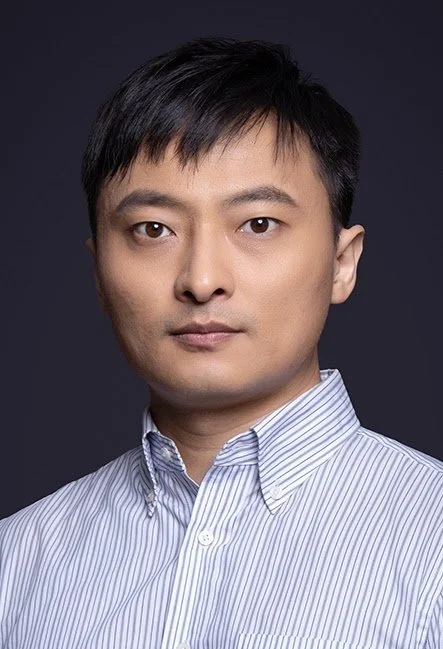
Program Chairs
Prof. Huawei Huang, Sun Yat-sen University
Huawei Huang is now an Associate Professor at the School of Software Engineering, Sun Yat-Sen University, China.
Huawei Huang earned his Ph.D. in Computer Science and Engineering from the University of Aizu (Japan) in 2016. His research interests include Distributed Computing/Systems, Communication, and Information Systems, particularly Blockchain, Web3, and DeFi protocols. He has served as a JSPS research fellow, a visiting scholar at Hong Kong Polytechnic University, and a program-specific Assistant Professor at Kyoto University, Japan.

Program Chairs
Prof. Songlin He, Southwest Jiaotong University
Songlin He is currently an Assistant Professor at the School of Computing and Artificial Intelligence, Southwest Jiaotong University, China.
Songlin He received his Ph.D. from the New Jersey Institute of Technology (USA) in 2022. His main research interests include blockchain, security, privacy, and decentralized applications involving various application scenarios such as IoT, cyber security and CDN. He has published papers on decent venues including IEEE TPDS, IEEE TII, ESORICS, and granted multiple international invention patents. He has won the 2024 IEEE IPCCC Best Paper Award and the 2023 Special Prize of Mechanical Industry Science and Technology Award. His research is supported in part by National Key R&D program and NSFC. He is also an IBM-certified Blockchain practitioner and instructor.

Program Chairs
Prof. Junbin Fang, Jinan University
Dr. Junbin Fang is a Professor at Jinan University, Director of the Guangdong Provincial Engineering Technology Research Center on Visible Light Communication, and Deputy Director of the Guangdong Provincial Engineering Research Center for Cloud Computing and Big Data Security Encryption. He is also a Council Member of the China Computer Federation (CCF) and Skill Competition Manager of the WorldSkills Competition. His research interests include intelligent information technology and security, privacy-preserving computing, and visible light communication. He has published over 100 papers in related fields and holds 15 authorized invention patents.
Hai Jin is a Chair Professor of computer science and engineering at Huazhong University of Science and Technology (HUST) in China. Jin received his PhD in computer engineering from HUST in 1994. In 1996, he was awarded a German Academic Exchange Service fellowship to visit the Technical University of Chemnitz in Germany. Jin worked at The University of Hong Kong between 1998 and 2000, and as a visiting scholar at the University of Southern California between 1999 and 2000. He was awarded Excellent Youth Award from the National Science Foundation of China in 2001.
Jin is a Fellow of IEEE, Fellow of CCF, and a life member of the ACM. He has co-authored more than 20 books and published over 900 research papers. His research interests include computer architecture, parallel and distributed computing, big data processing, data storage, and system security.
Operations Committee
Dr. Jing Zeng, China Gridcom Co., Ltd.
Dr. Yishuang Ning, Tsinghua University
Dr. Sheng He, Kingdee International Software Group Co., Ltd.
Dr. Zhuolin Mei, Jiujiang University
ICBC 2026 Program Committee
Dr. Muhammad Abdullah Adnan, Bangladesh University of Engineering and Technology
Dr. Kamanashis Biswas, Australian Catholic University
Dr. Costas Busch, Augusta University
Dr. Maurantonio Caprolu, King Abdullah University of Science and Technology (KAUST)
Dr. Zhixiong Chen, Mercy Collegey
Dr. Changhao Chenli, Indiana Institute of Technology
Dr. Xinxin Fan, IoTeX
Dr. Catalin Meirosu, Ericsson
Dr. Dirk Trossen, DaPaDOT Tech UG
Mr. André Augusto, INESC-ID, Instituto Superior Técnico, Universidade de Lisboa
Mr. Artem Barger, Idea Blockchain Research Lab
Mr. François Charoy, Université de Lorraine
Mr. Tong Gu, Southwest Jiaotong University
Mr. Xiangyu Li, Eastern Institute of Technology, Ningbo
Mr. Mike McBride, Futurewei Technologies
Mr. Sagar Suresh, A. P. Shah Institute of Technology
Mr. Rohan Vardhan, Meta (Facebook)
Mr. Zihao Zhou, Tianshui Normal University
Ms. Katerina Doka, National Technical University of Athens
Ms. Vidhi Rambhia, VJTI Mumbai
Prof. Supratik Mukhopadhyay, Louisiana State University
Prof. Kazumasa Omote, University of Tsukuba
Prof. Andreas Veneris, University of Toronto
As part of the Smart Computing Frontier (SCF 2026), we are still looking for passionate and dedicated individuals to join the organizing committees.
Contact Information
Organizing Committee
For inquiries regarding ICBC 2026:
icbc AT ServicesSociety DOT org
For questions regarding Smart Computing Frontier conferences:
confs AT ServicesSociety DOT org
Researchers and practitioners are welcome to join the Services Society community and participate in future ICBC and SCF professional activities.
Sponsors